
Product design
End to end experience
New feature
2022
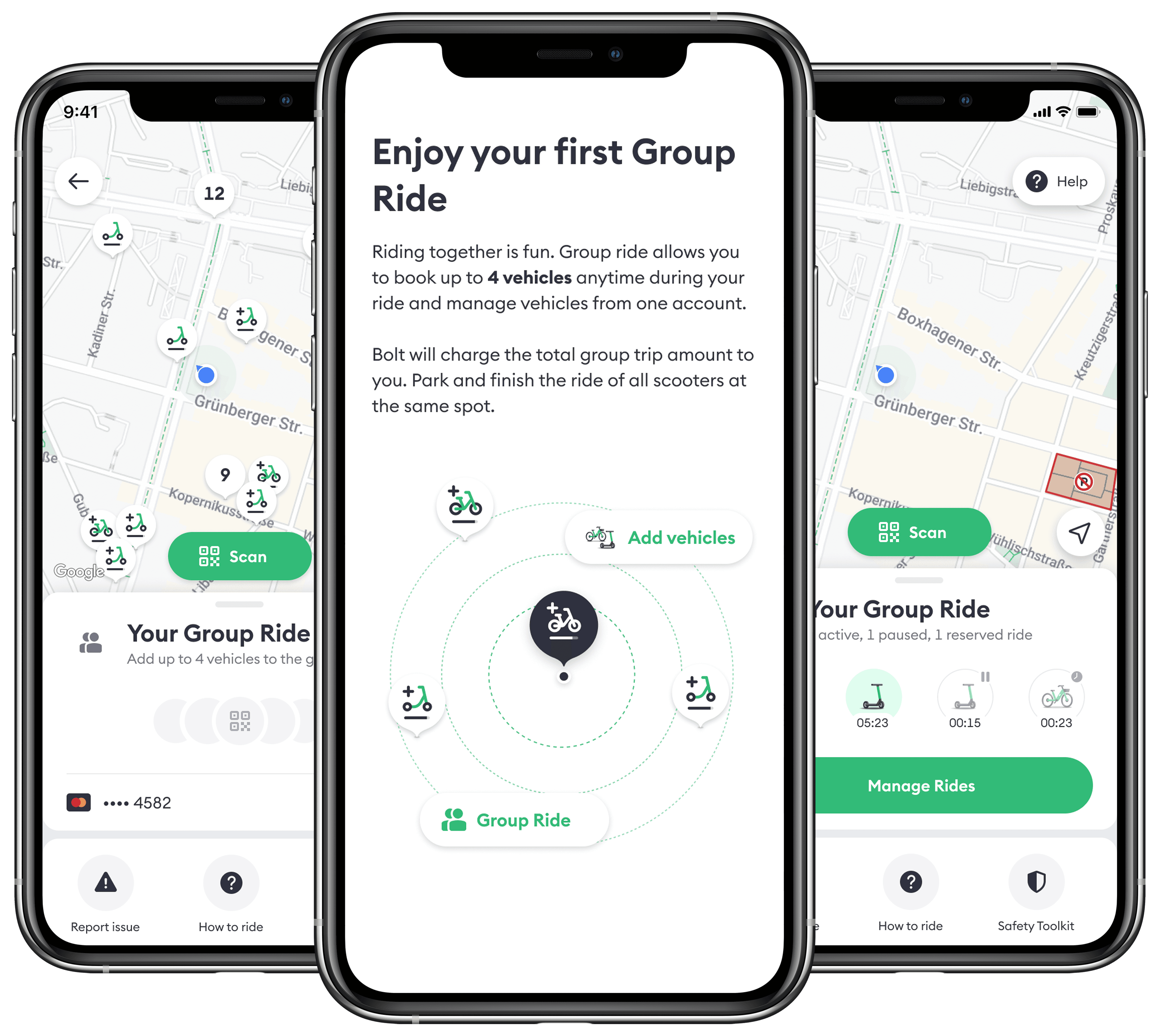
Group Rides- a new way to ride together.
Letting users unlock and manage multiple vehicles from one device, making riding around a metro city more social, safe, and accessible for travellers.
Product design
End to end experience
2022
Group Rides- a new way to ride together.
Letting users unlock and manage multiple vehicles from one device, making riding around a metro city more social, safe, and accessible for travellers.
*Optimised for the mobile, full case study on Desktop version
Impact and Outcomes
Order share
Order share
GMV increase
GMV increase
Incrase in ride duration
Incrase in ride duration
My Role
IC Senior Product Designer- End to end product and visual design, new component contribution to the design system
IC Senior Product Designer- End to end product and visual design, new component contribution to the design system
Team
1 Researcher, 1 Product manager, 1 Engineering manager, 5 engineers
Timeline
6 weeks design | Full roll out in December 2022
Market
iOS, Android | EU Region
Context
Bolt is a multi modal transport services like Ride-hailing, Drive, Micro-mobility and in some countries Food. I was part of the Rentals team that focused on micro-mobility offering e-scooters and e-bikes on demand for the last mile in 260 cities across Europe and Ireland.
Bolt is a multi modal transport services like Ride-hailing, Drive, Micro-mobility and in some countries Food. I was part of the Rentals team that focused on micro-mobility offering e-scooters and e-bikes on demand for the last mile in 260 cities across Europe and Ireland.
Why this project?
I am proud of this project as I had just joined Bolt's Rental team a month back as a Senior product designer and we launched in very high paced development environment- Collaborating and iterating quickly through the product development cycle. We initially had a GMV target of 2% but the pilot itself crossed over 4% in revenue- reflecting a clear understanding of the usage experience.
I am proud of this project as I had just joined Bolt's Rental team a month back as a Senior product designer and we launched in very high paced development environment- Collaborating and iterating quickly through the product development cycle. We initially had a GMV target of 2% but the pilot itself crossed over 4% in revenue- reflecting a clear understanding of the usage experience.

The Starting Point
Tandem riding remained a frequent cause of accidents, causing 5.12% of all accidents recorded by Bolt. In 2022, we shipped tandem detection, an alert that warned users when the system detected two riders on one vehicle. After months of deployment, incident rates hadn't moved. Digging in deeper, this feature warned the users BUT was..
Tandem riding remained a frequent cause of accidents, causing 5.12% of all accidents recorded by Bolt. In 2022, we shipped tandem detection, an alert that warned users when the system detected two riders on one vehicle. After months of deployment, incident rates hadn't moved. Digging in deeper, this feature warned the users BUT was..
..a reaction to an unsafe riding behaviour rather than preventing one.
..a reaction to an unsafe riding behaviour rather than preventing one.
The alert was technically functioning. But it was diagnosing a symptom, not the cause. The real question was: why were people riding tandem even when other Bolt vehicles were available nearby?
The alert was technically functioning. But it was diagnosing a symptom, not the cause. The real question was: why were people riding tandem even when other Bolt vehicles were available nearby?
The Reveal
The Reveal
Users felt that they had no choice other than tandem riding in certain scenarios.
Users felt that they had no choice other than tandem riding in certain scenarios.
With the user researcher, we planned qualitative studies to understand why
With the user researcher, we planned qualitative studies to understand why
No other way
Not all users had the app installed, due to low battery, no account, or never having used micro-mobility, users were hesitant to make the decision download the app and proceed on the spot.
Safety
Female riders were hesitant to use scooters due to safety concerns when riding alone. But since Bolt only allowed single unlocks, users chose to other services so that the primary rider could pay for both rides.
Limits
Limited options for unlocking multiple vehicles on Bolt discouraged users. When only one user had the Bolt application, it was difficult for all users to unlock multiple vehicles because of the lack of options, the group defaulted to tandem rather than lose time or split up.


Intuitive interface
How might we ensure safer-riding
behaviour among a of group users in
certain use-cases via our service
How might we ensure safer-riding
behaviour among a of group users in
certain use-cases via our service
How might we ensure safer-riding
behaviour among a of group users in
certain use-cases via our service
One of the user’s phone is dead, payment is not working or use does not have any micro-mobility account
Knowledge and prevention


Design Decisions
Entry point
A new entry point was introduced on the map screen that served the user group who are aware of the feature for faster group rides. We intentionally kept the learnability of new experience easier
Multiplying from the "core journey'
Since all our rides started with one vehicle, we wanted to retain and ensure the core journey, remained the same with additional visual indicators that suggested adding more vehicles
Information Disclosure
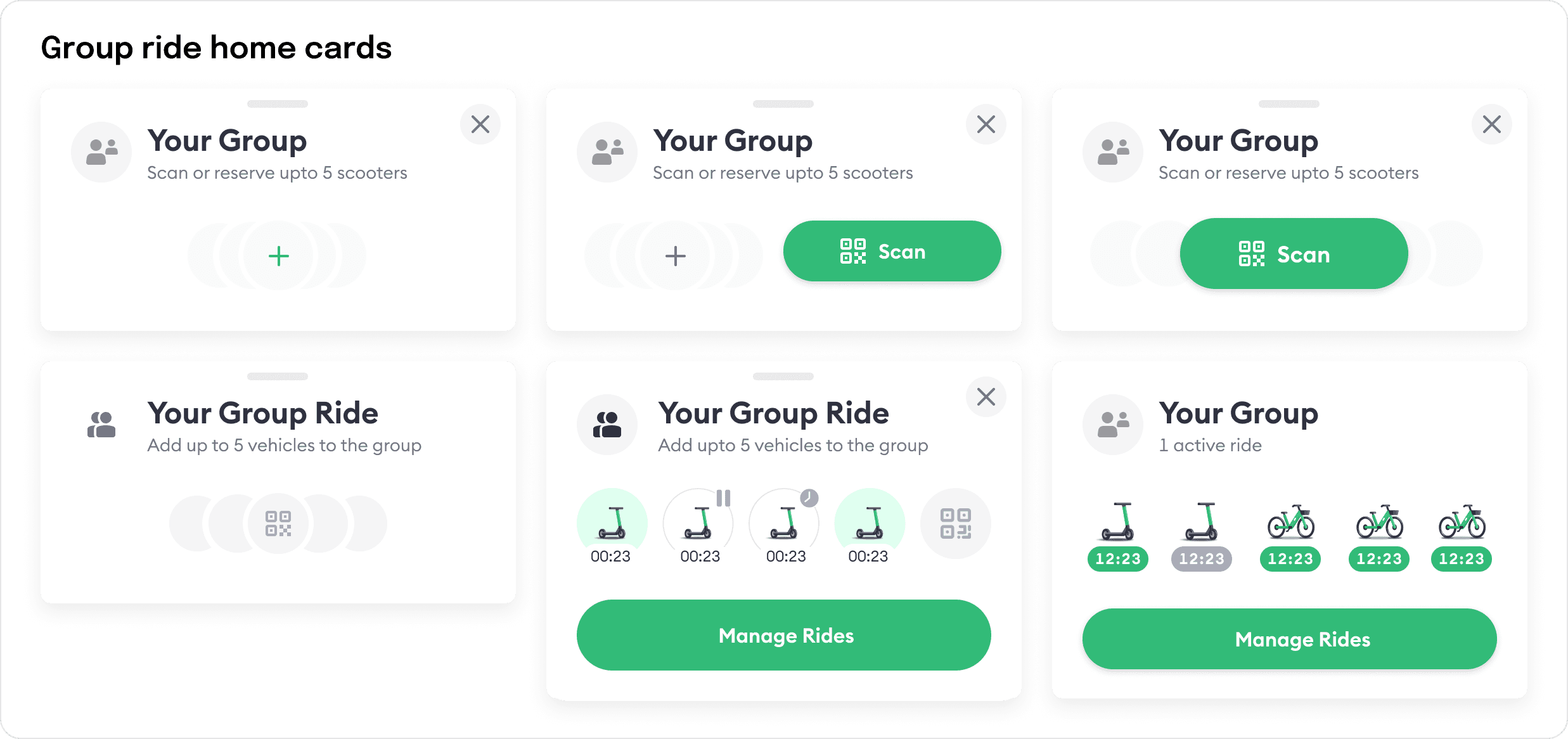
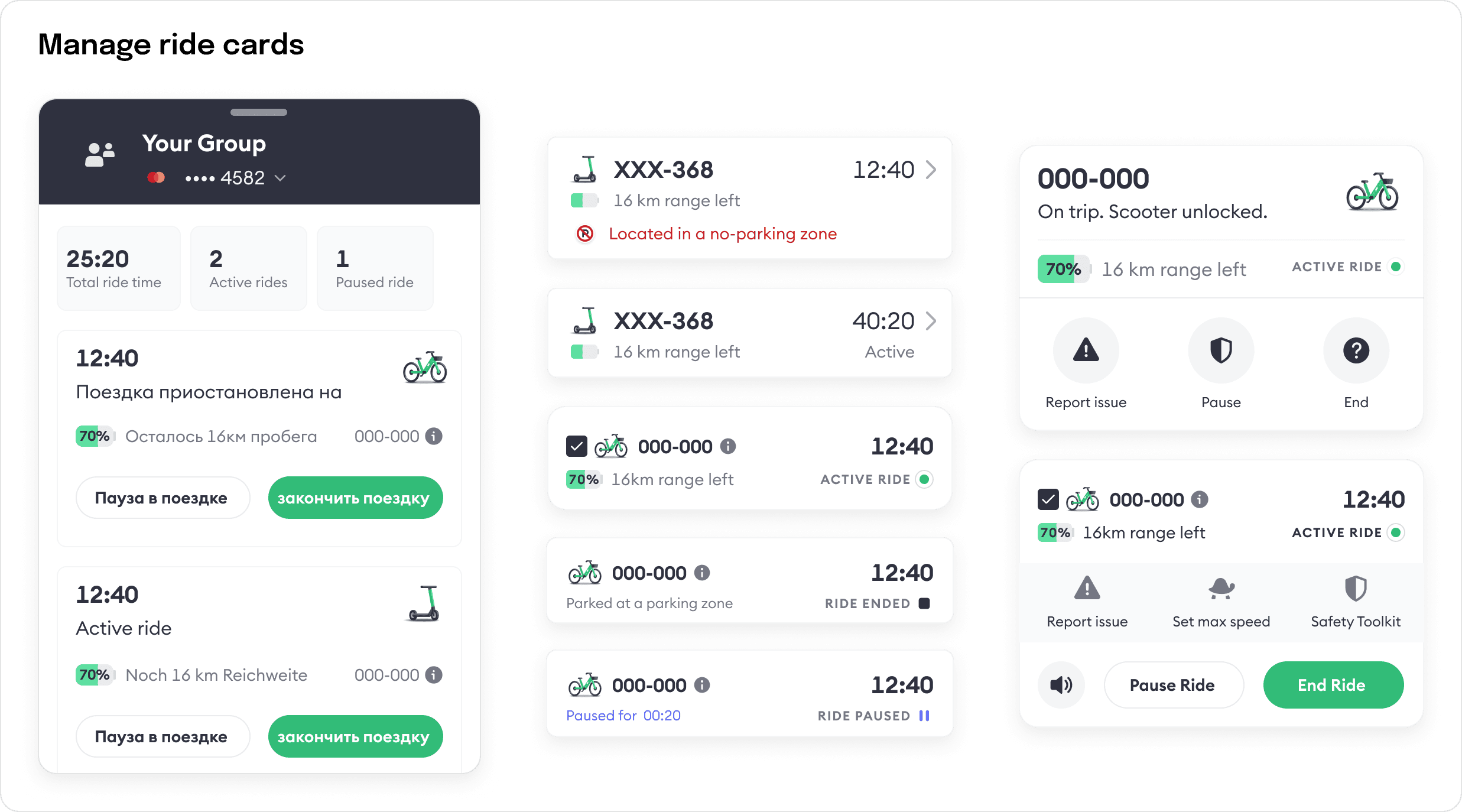
Unlocking multiple vehicles would mean to multiple times the information on vehicle card. It was important to progressively disclose information that helped users identify different vehicles and also get an overall trip status.
Parking Considerations for more than one vehicle
We made a strategic decision to let users end rides separately at end-ride journey due to increasing city rules. This deliberate friction ensured vehicles in a group ride parked properly retaining existing behaviour, reduced the possibility of city fines.

Design Decision 1
A new dedicated space for group rides and safety
A new dedicated space for group rides and safety
Entry point
Entry point
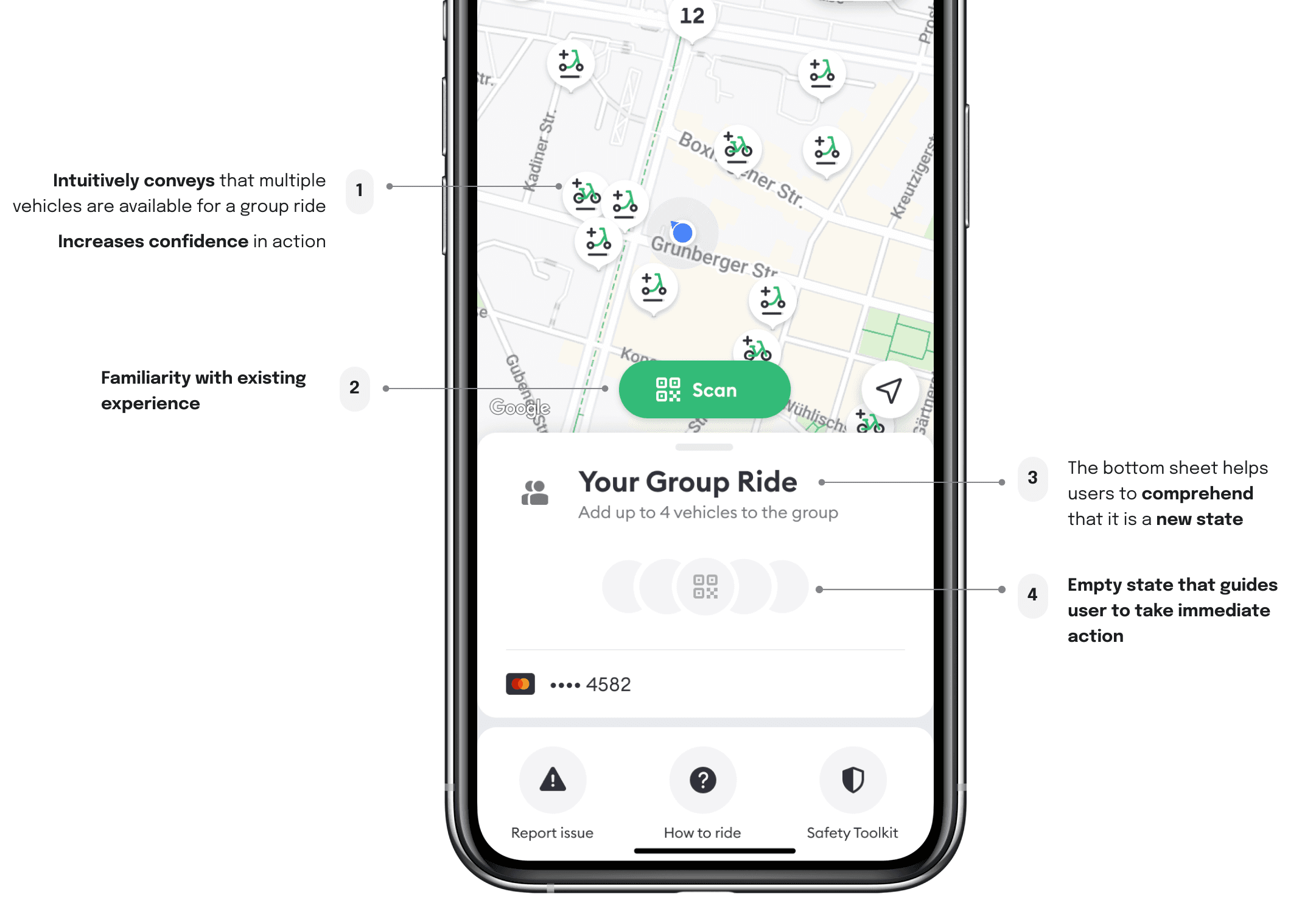
A new entry point was introduced on the map screen that served the user group who are aware of the feature for faster group rides. We intentionally kept the learnability of new experience easier
A new entry point was introduced on the map screen that served the user group who become more aware of the feature for faster group rides. We intentionally kept the learnability of new experience easier.
A new entry point was introduced on the map screen that served the user group who become more aware of the feature for faster group rides. We intentionally kept the learnability of new experience easier.
The goal was to design for maximum discovery and adoption- introduced a secondary button on the home-screen, and a new dedicated space for all safety and information
Design Decision 2
First Time Experience made simple
First Time Experience made simple
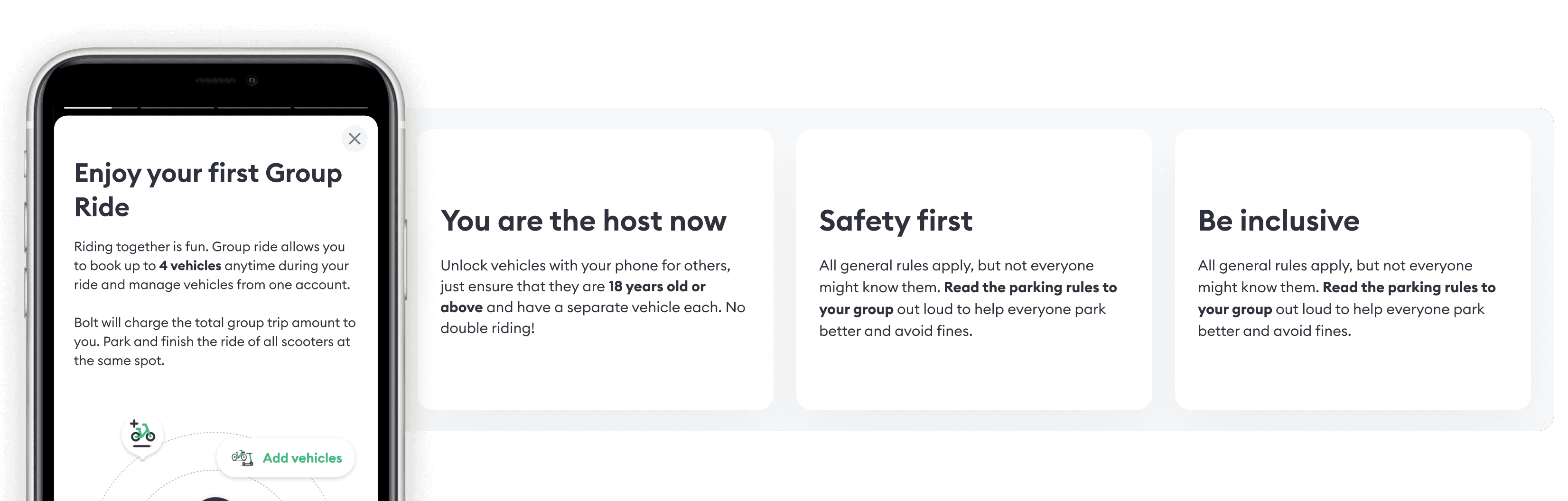
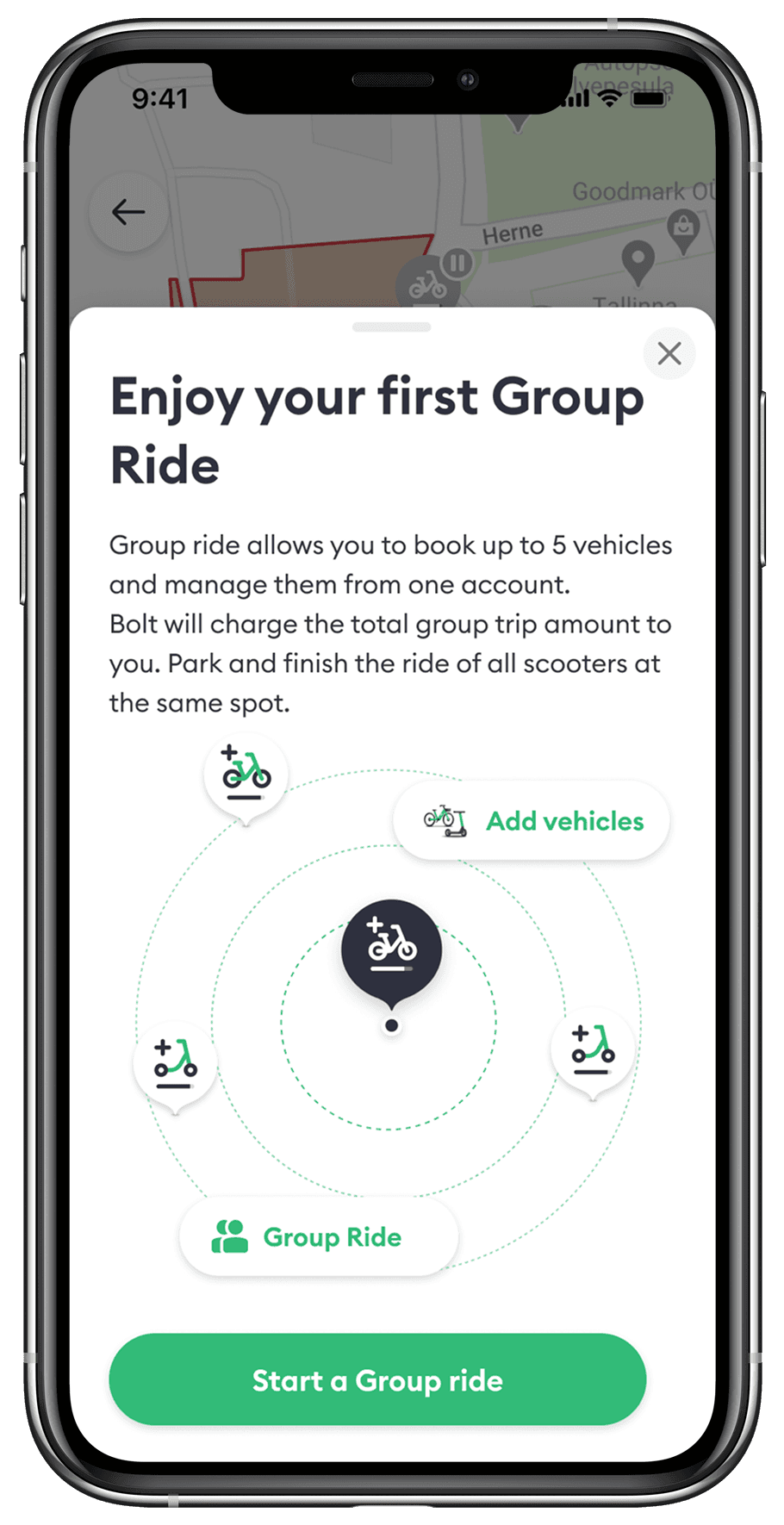
First-time hosts get lightweight onboarding, just enough to ride with confidence.
Pre-Ride Map screen
One of the major decisions that was taken was to retain the Scan CTA on the map for Group rides as 70% of the rides started from the scan CTA
Pre-Ride Map screen
Pre-Ride Map screen
First-time hosts get lightweight onboarding, just enough to ride with confidence. Pre-Ride Map screen One of the major decisions that was taken was to retain the Scan CTA on the map for Group rides as 70% of the rides started from the scan CTA
First-time hosts get lightweight onboarding, just enough to ride with confidence. Pre-Ride Map screen One of the major decisions that was taken was to retain the Scan CTA on the map for Group rides as 70% of the rides started from the scan CTA
The new experience
Group ride experience
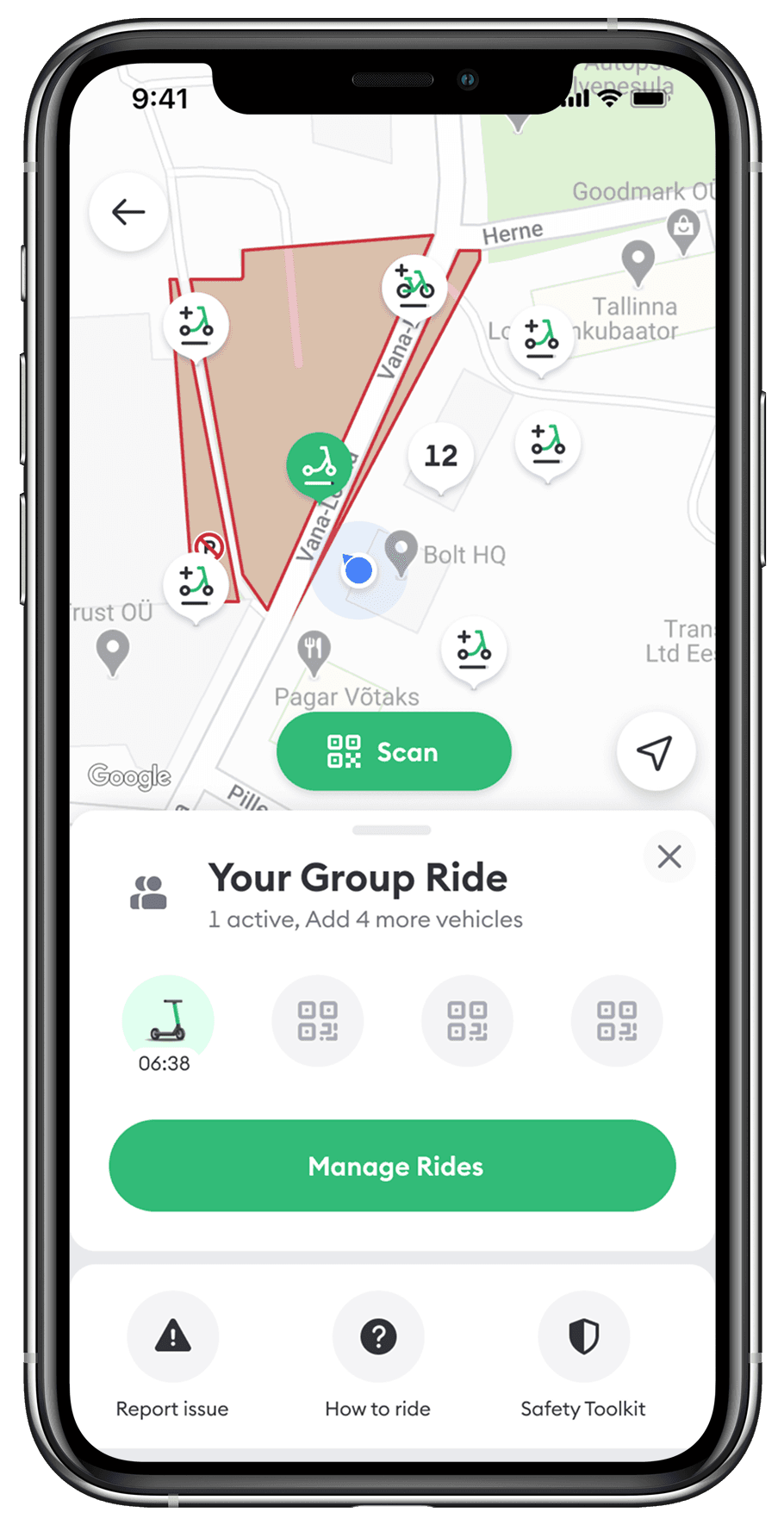
Progressive disclosure ensured that users were not overloaded with more information than required. We did a card sorting exercise during user testing that informed us that the most important information users cared about was ride time and parking zone information on the map screen.
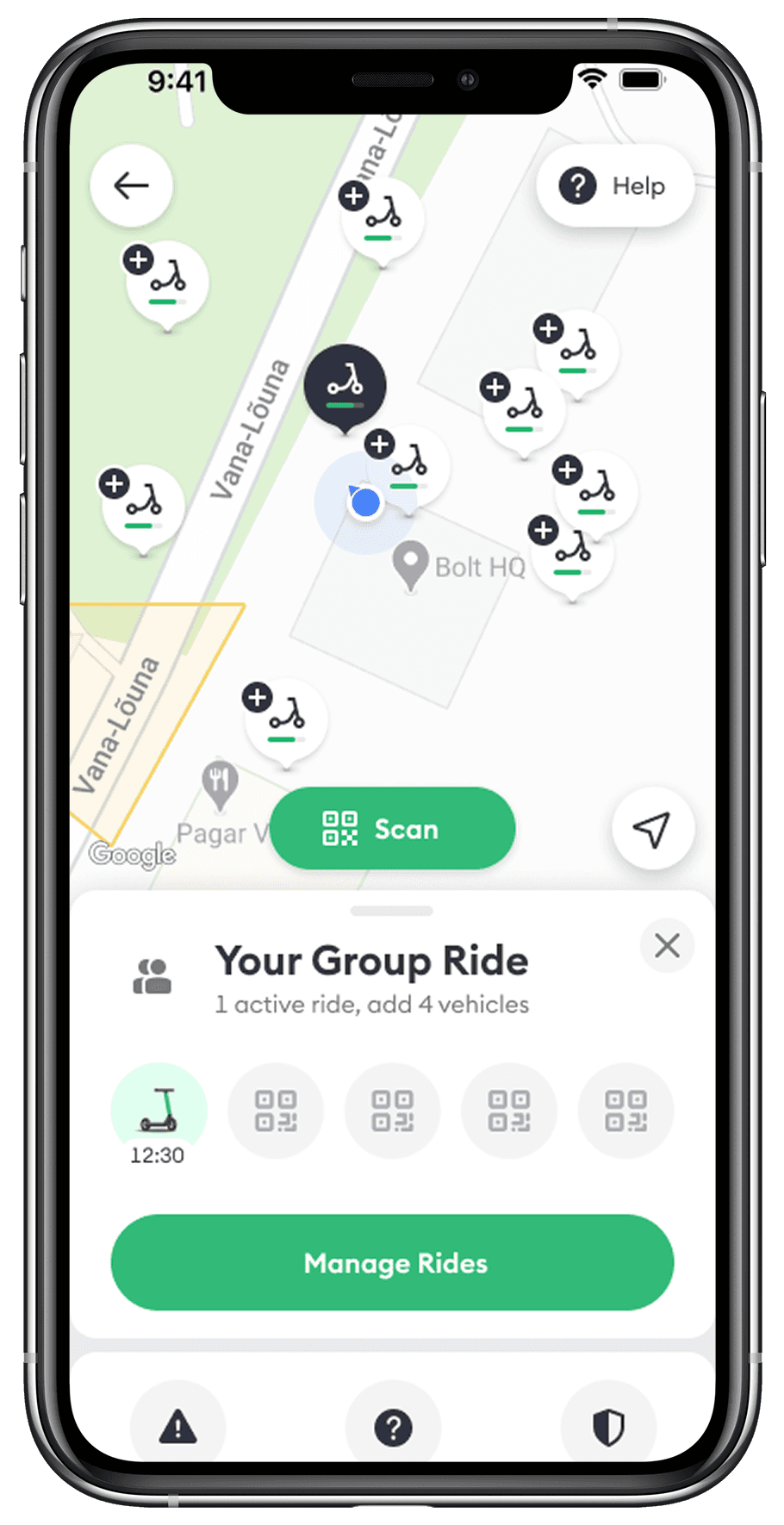
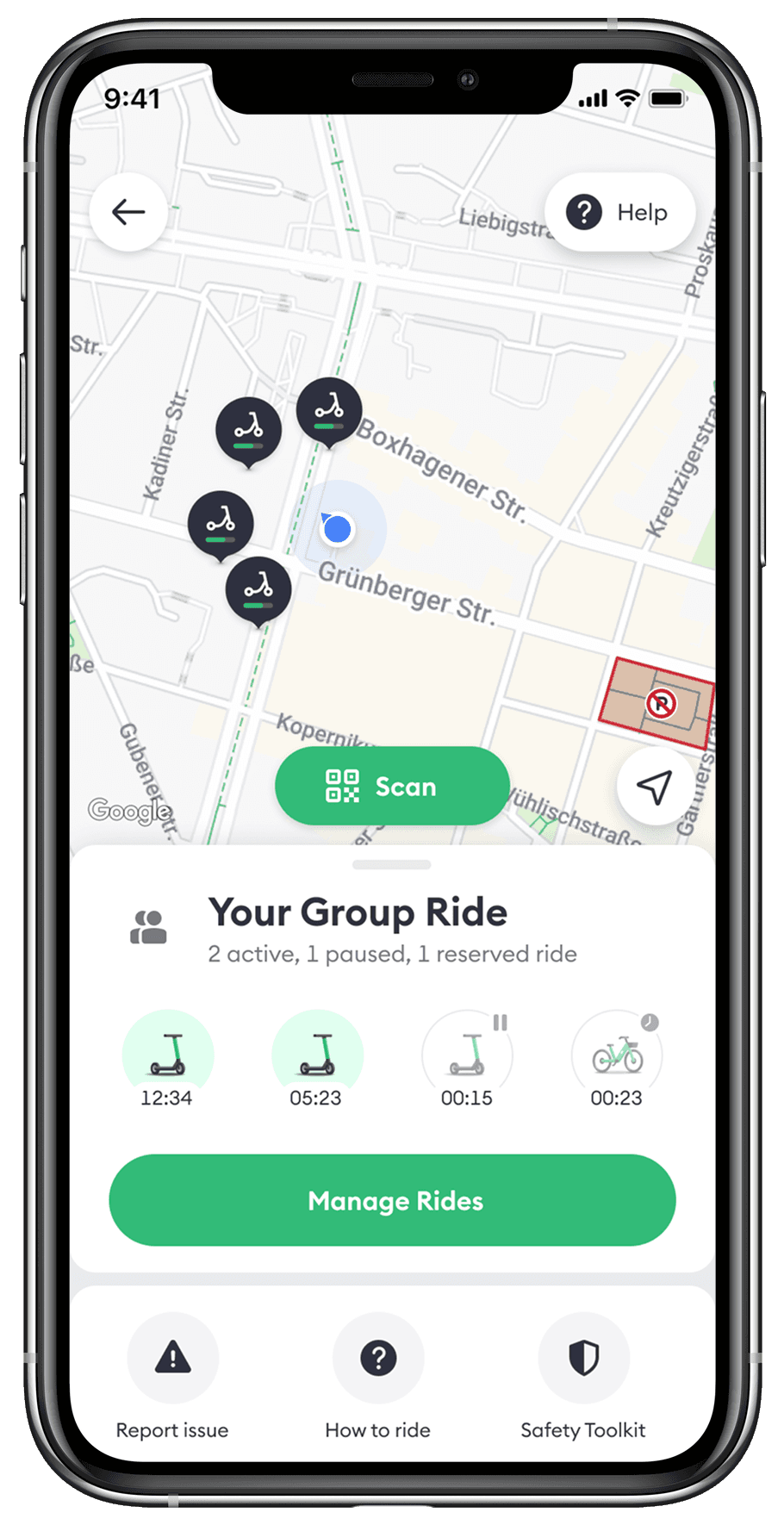

The added experience
Starting from a solo ride
A secondary CTA in the active ride flow let users add vehicles without interrupting their journey. This was one of the major differentiator from our competitors's offerings.
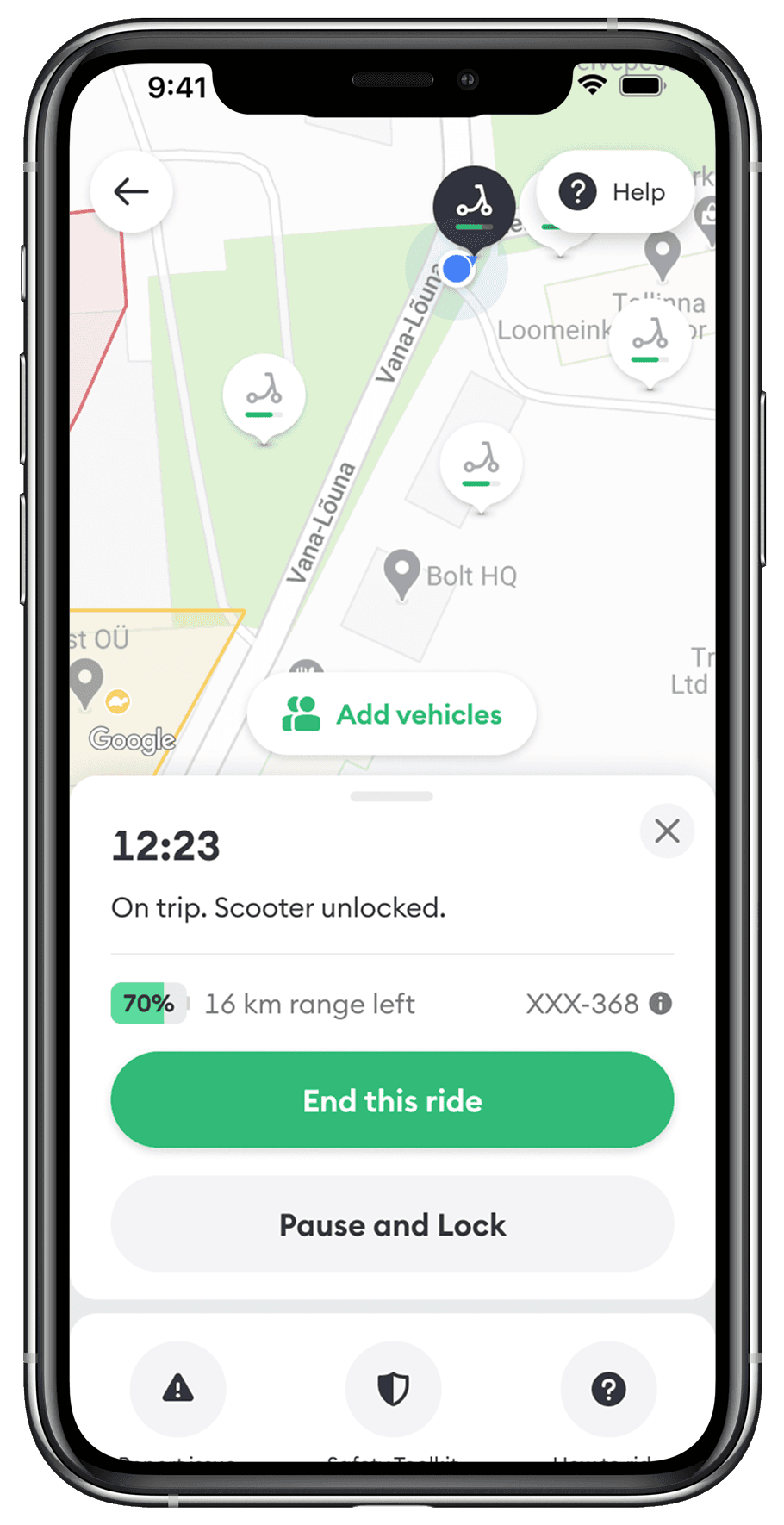
The approaches
Iterations and Crazy 8s
I approached the problem with limited data and assumptions, exploring multiple meaningful directions in the quickest way. All these directions were done within a week, polish wasn't the goal here, an open discussion within the product trio to fundamentally foresee challenges, how small decisions affects the user experience and how best to introduced the experience to our users.

Approach 1
Scanning multiple vehicles on the Scanner screen: Our data suggested that the usage of scan button for renting vehicles on the street was 80%
Challenges
would not serve cities and areas with less availability.
too much information for consumption
defies the purpose of the scanner screen’s JTBD
taking vital vehicle information from the map screen

Approach 2
Simplifying the experience for existing renting behaviours, this approach explored the concept of adding multiple vehicles like a solo ride one by one.
Challenges
users may feel they are repeating steps
users may feel they can only scan a vehicle at a time

Approach 3
To simply the last approach we assumed that users would usually know the exactly number of vehicles they need, this approach explores what if we suggest the best vehicles depending on distance, battery etc.
Challenges
the value of best differs users to users, intent to intent
users may feel lack of choice an do not understand why some vehicles are unavailable to them

Learnings
Ship fast, refine faster
Starting with 10% of users gave us real signal before full exposure Brussels returned 4.4% GMV, more than double the target. The phased release also surfaced motion issues across devices and created space to ship parallel design system updates before the final rollout reaching millions during the scooter season.
Starting with 10% of users gave us real signal before full exposure Brussels returned 4.4% GMV, more than double the target. The phased release also surfaced motion issues across devices and created space to ship parallel design system updates before the final rollout reaching millions during the scooter season.
Collaborate to ship the most valuable experience
A lot of decisions were taken with the team even before the designs were fully formed, the team already had known the context and probing the right questions helped shape the experience go live faster and better
A lot of decisions were taken with the team even before the designs were fully formed, the team already had known the context and probing the right questions helped shape the experience go live faster and better
Simplify without losing familiarity
Decisions like the entry point, map pins, and parking rules were all shaped by one principle- preserving what users already knew while introducing only what was necessary. That's what made a multi-vehicle experience feel immediate rather than learned
Decisions like the entry point, map pins, and parking rules were all shaped by one principle- preserving what users already knew while introducing only what was necessary. That's what made a multi-vehicle experience feel immediate rather than learned
Learnings
Learnings
Read Next
Read Next

Copyrights@2026




Copyrights@2026